Archive · One page

Stories

Every interview, memoir, and reflection from Lahpet Voices lives on this one page. Open a story to read it in full. Every contributor has reviewed their piece for consent and safety before publication.
Interview · Family

An interview with my father

A conversation about belonging, collective responsibility, and the quiet resilience of Burmese identity.

01 Open to read
I've never lived outside Myanmar for a long period except for during college. I think mostly because of family and business, since both my parents, my wife and my children stayed here. Besides that, maybe it was also because I spent so much time there. Leaving permanently would feel like cutting myself from my heritage, even when the situation here became difficult.
To me, the core of Burmese culture is consideration for others. It is more of an unspoken understanding: knowing when to speak and when to remain silent, respecting elders, and avoiding unnecessary conflict. I think it's the most important thing in how people here survive and coexist.
I guess similarly, the aspect I hold onto most strongly is the sense of collective responsibility. We shouldn't live only for ourselves. Our family, neighbours, and community are deeply connected, so that when one person suffers, others feel it too. This mindset shapes how we act and how we endure difficult circumstances together.
It's probably resilience mixed with humility. This country has been through uncertainty for generations, and people here have learned to endure it quietly. Of course that doesn't mean we stay still, but I think we always like to carry pain without always expressing it.
Not really. When I was younger, I don't think I ever questioned it. Right now I still feel the same attachment, but also a greater concern. Feeling like you belong in a country that has always faced difficulty is strange.
I think it is the way we gather. In Myanmar, even a small occasion becomes a roomful of people, and the room is filled with food. When my daughter moved to Singapore, she told me that the hardest part was not the weather or the language. It was the silence at mealtimes. The next generation, I hope, will keep the habit of making a table that is too small feel too big. There is a Burmese word for this, အိမ်မှာလာပြီး, which means "they came to the house", and the only correct response is to put another plate on the table.
I would want them to leave behind the suspicion. In our country, people have learned to be careful with each other. We watch how someone enters a room before we speak. I understand why this exists. It came from a long period of fear. But I do not want my children to live that way. I would want them to leave behind the hierarchy too, the way we use titles and age to put distance between people. In Singapore the children are polite in a different way, more direct, more equal. And I would want them to leave behind the economy that forces them to leave. I do not consider that a value of the country; I consider it a failure of the country.
It has become more complicated, and more honest. Before, I think I was able to tell myself a story about the country that made sense. The story was that we were going through a difficult patch but we were still ourselves. After 2021 that story stopped working. The country I grew up in is not the country my children are growing up in. The economy has collapsed. Many of the people I went to school with have left. My neighbourhood is quieter. I do not feel betrayed, because Myanmar was never a single thing. It was always a country of contradictions, but I do feel tired. What I have not lost is the feeling of responsibility. My children are not in Myanmar, but their cousins are, and the people who taught them are. I am still responsible for a place I am no longer living in.
Do not let the efficiency of Singapore make you feel that your family is inefficient. We are not slow; we are thorough. Learn the rhythm of the place you are in. Make some gatherings something you are inventing together. Do not lose the language. I know it is hard. The children speak faster here, they pick up Singlish, the school teaches them in English. But Burmese is the way you will pray, joke, and argue with the people you love. Try to keep it, even at home.

A conversation with my father about his experiences with Myanmar and Burmese culture, recorded for Lahpet Voices. Names and identifying details have been kept as agreed with the contributor.

This interview was recorded across three afternoons at the family home in Yangon, transcribed in Burmese, then translated with the contributor's review. The contributor chose to keep his relationship and the family's neighbourhood identifiable at a district level; the names of immediate family members and the specific location have been withheld at his request.

After the recording stopped, he said belonging, for him, was no longer a place. It was the way his wife laughed when she was nervous. It was the name of a street he used to walk to school.

He said he had not realised until he was older that the country is also made of these small things. The big things, the politics, the economy, the history, happen around you. The small things are what you carry.

It was the most Burmese thing he said all afternoon, and he did not know it was Burmese at all.

Interview · Organisation

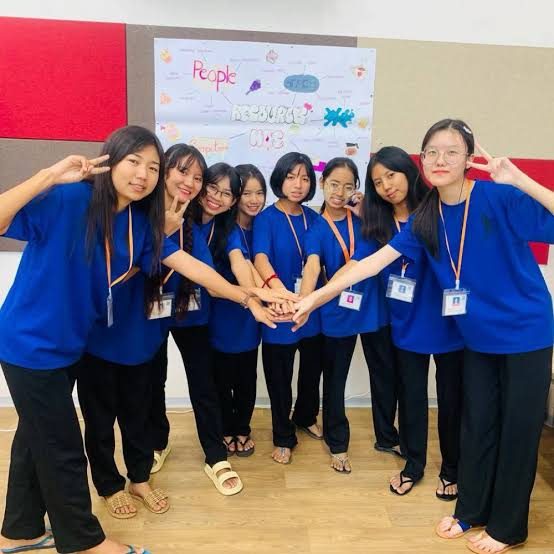
SISU: From vulnerable to valuable

Inside the Yangon training centre turning displaced youth into confident, employable members of society.

02 Open to read
It is a profound shift. Many of our trainees come to us feeling invisible. Because of the ongoing conflict and economic collapse, they've seen their schools close and their families struggle. When they first walk through our doors at SISU, they often feel like they don't have a true meaning. Our goal is to show them that they can be a solution to their own future. By giving them skills, whether it's making a perfect espresso in Hospitality or managing a ledger in our Certificate in Business, they feel like they are regaining their sense of dignity. They stop being "vulnerable" and start seeing themselves as "valuable" employees who can actually contribute to their families and their country.
It is quite intensive. It's a 200-hour commitment to learning English alone, alongside management, finance, and marketing. We also have a Training of Trainer (ToT) program that equips them to pass these skills on to others. It's about building a sustainable cycle of knowledge. But we also have very practical, hands-on courses like Agriculture 101, where they learn the basics of cultivating soil and growing vegetables. In a shrinking economy, being able to grow your own food is a vital form of self-reliance.
In times of crisis, the most marginalized are often the first to be forgotten. The Deaf Kitchen is an accessible training facility where trainees learn food preparation and hygiene in a way that respects their needs. It embodies our commitment to being inclusive and community-driven. Seeing a trainee who was silenced by both society and circumstance find their voice in a professional kitchen is exactly why we do this.
I see it every single day. You see it in the way they handle the Daily Meal Support. While we might provide the rice, the trainees bring their own curries to share. They don't really make a big deal out of it, they just do it because of that sense of collective responsibility. They carry their pain quietly but they use that quiet strength to show up for class every morning, even when things are difficult.
We have to be honest with them. Because the economy has shrunk considerably, many feel they have no choice but to leave. We include awareness of human trafficking and exploitation in our curriculum because we don't want them to be taken advantage of. We want them to have the accountability and trust that makes them valuable abroad, but we also want them to have the knowledge to stay safe.
Our data shows that after our programs, many employees stay with the same company for months or even years, whether it's in a hotel, a hospital, or as a home helper. We've seen thousands of people positively impacted by these programs. "Dare to Dream" means that even when we are being pulled by conflict, we can still achieve a lot of great things.
It was not one moment. It was a series of small ones. I was teaching English in a small classroom in Yangon, and one of my students stopped coming to class. It was a teenager I had been working with for about a year. I asked around, and eventually I learnt that he had gone to Malaysia. He had been promised a job. Within three months he was back, and he was not the same. He would not talk about what had happened. He would not go to school. He would not be in the classroom anymore. Around that same week, three other former students told me similar stories. I sat with one of them, and I said, “If you had known what you know now, what would you have wanted someone to teach you before you left?” He thought for a long time. Then he said, “How to read a contract. How to know if a person is telling me the truth. How to refuse without losing my job.” I sat down the next week and wrote the first SISU curriculum. It was four pages long. It was about contracts, and about truth.
We track four things. Whether the trainee finishes the program. Whether they are employed within three months. Whether they stay in that job for at least six months. Whether they are still in safe contact with us a year later. We do not measure salary, prestige, or whether they went abroad. We measure whether they have a stable footing and whether they are still reachable. Every quarter we publish these numbers on our website. Sometimes the numbers are bad. We still publish them.
They teach me how to be a better listener. Before I started SISU, I thought teaching was mostly about clarity: saying the right thing in the right way. I have learned that it is mostly about silence. When a trainee comes to me with a problem, the most important thing I can do is to be quiet long enough that they hear themselves think. Sometimes the answer is a contact. Sometimes it is just being told someone has heard them. The trainees have taught me patience. I have a tendency to want to fix things. They have taught me that not everything needs to be fixed. Some things need to be sat with. My Burmese teachers used to say that not everything needs to be rushed. I did not understand it then.
I do not try to convince them to stay or leave. If you leave, leave with a plan. Do not leave because someone you do not know promised you something. Do not leave because your cousin's friend left and you assume it will be the same for you. If you leave, leave because you have a job, a name, a contact, and a way home. If you leave, leave without burning the bridge. Your mother is still here. Your grandmother is still here. The country will be here. Do not make it impossible to come back. If you leave, send something back. It does not have to be money. It can be a story. It can be a phone call home on a Tuesday.

Founded in 2016, SISU (Step-in Step-up) is a Myanmar-based non-profit organisation dedicated to transforming vulnerable individuals into confident, skilled, and employable members of society. Through vocational education and holistic support, SISU equips young people with the practical skills, knowledge, and self-belief needed to build sustainable futures for themselves and their communities.

SISU offers training programs in hospitality, healthcare, office administration, agriculture, and digital literacy. Beyond technical skills, the organisation places strong emphasis on personal development, English language proficiency, financial literacy, and life skills. Operating from its vocational training centre in Yangon, SISU works closely with businesses and social impact partners to create pathways from education to meaningful employment.

Speaking with Zarni made it clear that SISU is far more than a vocational training centre. At its heart, it is an organisation built on restoring hope in a time when hope can often feel scarce. Its motto, Vulnerable to Valuable, is not simply a slogan but a philosophy that guides every aspect of its work: from teaching practical skills and English proficiency to creating inclusive spaces like the Deaf Kitchen, and preparing trainees for the realities of migration.

What stayed with me was the emphasis on dignity. In a country where conflict and economic collapse have disrupted countless lives, SISU focuses on what people are capable of becoming rather than what they have lost. The message of Dare to Dream matters in Myanmar today. By investing in education, inclusion, and human potential, the organisation shows that meaningful change often begins with small acts of hope.

Family · Memoir · Chapter One

1967: The year our world turned upside down

An eleven-year-old remembers the Anti-Chinese riots of Rangoon — the hundred days that followed, and the father who came home.

03 Open to read
I was only eleven when Ah Ma1 lost her long and gruelling battle with breast cancer. The year was 1967. Ah Ma left us on the 23rd of April, at the tail end of Yangon's unbearable summer. It is hard to describe the feeling of children without their mother. I could only imagine the pain that Ah Pa2 felt as a husband without his wife. I recognised the sense of smallness in my heart. I knew life would be different, but I could not foresee how difficult it would become.

Ah Pa promptly returned to his job as the manager of Nay Pyi Taw cinema soon after. While he cast a cloak of calmness and positivity onto our household, Eng Eng3 — my oldest sister — was the one who stepped up to the role of homemaker. She was only sixteen then, but our meals and chores were all organised by her. My older brother Lek Lek remained a somewhat carefree child, though I understood that his heart ached no less than mine.

Ah Ma's youngest sister — Zeng Cai E, or Aunty Lily — became a substitute caregiver for us in her absence. Aunty Lily had promised on Ah Ma's deathbed that she would take care of us, especially me — considering how much I used to fall sick as a child. In the care of my family, normal life resumed.

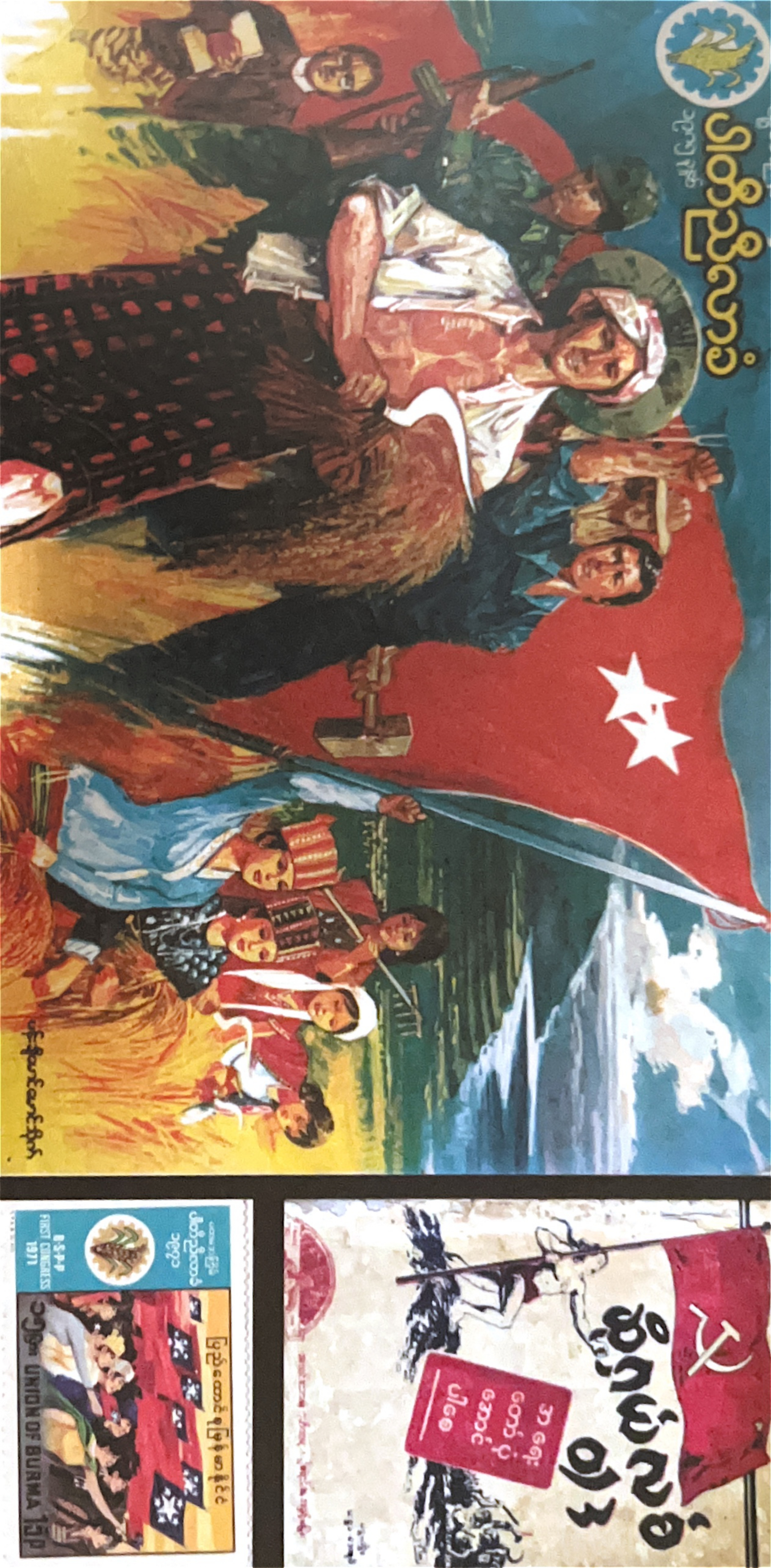
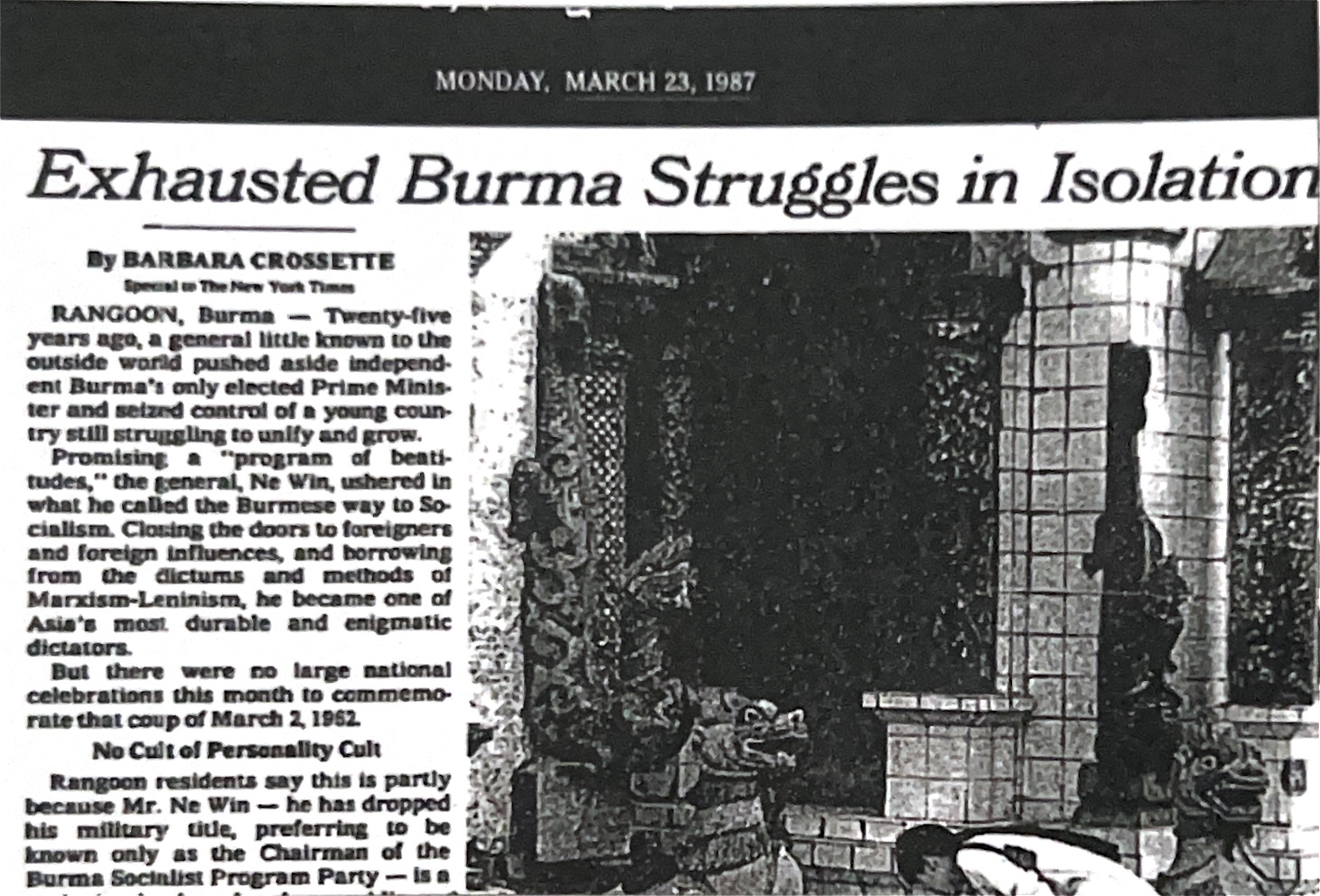
The pain in our home was hidden in plain sight against the harsh backdrop of Ne Win's Burmese Way to Socialism. The ongoing nationalisation of private enterprises brought much hardship to common people across Rangoon as the economy tanked and wages dropped. Rations were in place to control increasing prices on necessities as production plummeted. Everyone was focused on survival.

My focus, made clear by Ah Pa, was to keep my head down in school and excel in my studies. Much to his delight, I enjoyed attending the Chinese Girls' Middle School thoroughly. I was in Grade 5 then, and schoolwork was a breeze. On top of that, my teacher recognised good students by rewarding them with the Little Red Book4 and a Mao Ze Dong pin. When I received my reward, I was so proud. Having something so beautiful as my own meant a lot to eleven-year-old me. Not only was I proud to be a good student, I was also incredibly proud to be Chinese.

While it held little political meaning to me, the pin was a sign of brewing danger to others. As the military junta strengthened its xenophobic propaganda, the narrative surrounding the Sino-Burmese quickly shifted from friendly Pauk Phaw5 neighbours to opportunistic black marketeers. It was convenient to identify Mandarin schools as the breeding ground for communism. Aggravated by the students' display of "Chinese pride" and wary of China's growing influence, conflict broke out in my school on 22 June.

I am not sure what happened exactly, but a worried Ah Pa came rushing to pick me up from school that day. Amidst the rowdiness, Ah Pa got into a minor confrontation with the Burmese principal. Despite some heated exchange, the altercation ended quickly with both gentlemen backing off and apologising.

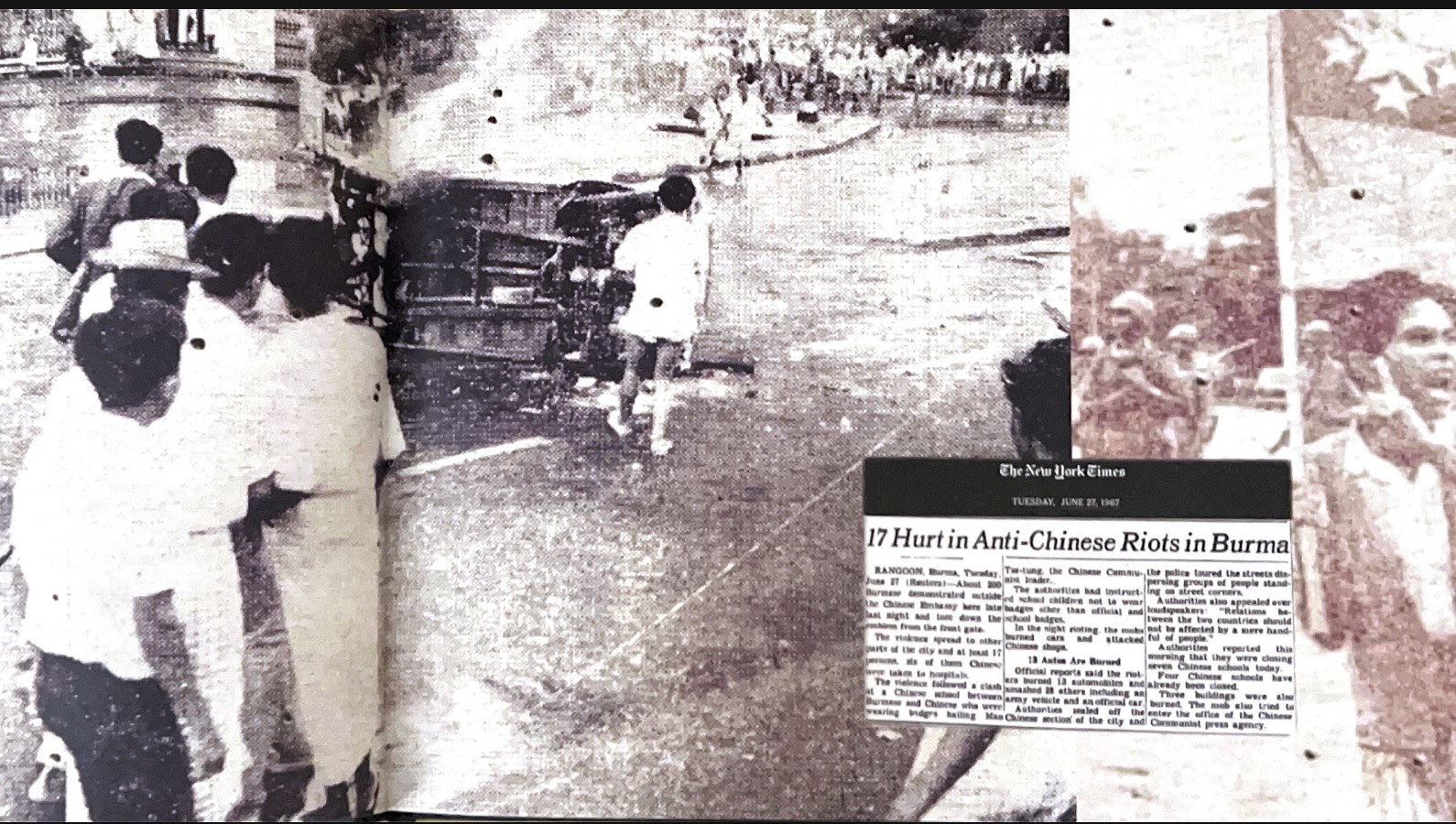
Less than a week later, the situation escalated to what we now know as the 1967 Anti-Chinese riots of Burma. The events of the next few days, from 26 June onwards, have been deeply etched in my brain.

On that fateful night, Ah Pa set out for his usual night stroll. Sensing trouble and unruly crowds on his walk, he quickly went up to seek shelter in his brother's apartment around the corner. From above, he noticed a long-haired man in black pants walking toward the violent mob and quickly signalled for him to come up to hide with him. This man turned out to be an acquaintance — one of the traditional peacock dancers from a clan. That night, Ah Pa saved his life.

Back home, Eng Eng and I were left to worry helplessly. There were no phones then and no way of knowing what was happening outside. Ah Pa was out. Lek Lek was out. We had no idea if they were dead or alive, and all this while, you could hear shouting and the sound of mobs rounding out Chinese folks who dared to come out. We hid in silence and prayed for it to be over. Thankfully, both Ah Pa and Lek Lek returned safe and sound the next morning.

Again, trouble came the next night. Mobs — consisting of plain-clothes militia, low-caste Indians and Burmese folks — entered Shwe Dagon Payar Road and started attacking shops and homes on the ground floor that had any Chinese presence. As the situation escalated, our Indian-Muslim neighbour, who I always feared due to his fierce demeanour, went down to the bottom of the stairwell to guard the building. He belonged to a higher caste and commanded respect from the Indians within the mob that night. It was his protection that saved us from a particularly revengeful ex-employee who was fired due to misconduct under Ah Pa's management at the Nay Pyi Taw cinema. To an angry crowd yelling out for Ah Pa's name, our neighbour stood his ground and threatened to reciprocate with violence if anyone dared to touch him. He knew we were in danger and risked his life to protect us.

During the long night, we sought shelter in our neighbour's house. We were quivering with fear and trying our best not to make a sound; we tried to peek through the shutters but could not see much. All we could see were distant shadows of the growing mob, filled with bloodlust and anger. The sounds, though, permeated with ease through the apartment's windows — yelling, glass shattering, screaming. The smell of gasoline and burning lingered. It felt like an endless few hours of terror.

The next day, when the chaos subsided, Ah Pa headed off to help out within the community, and the adults pieced together the story of what occurred from the horrific remnants. Seeing that the violence was snowballing, three men from the nearby clan house called out to the mob from their unit on the third floor and started to throw objects and furniture to the ground. Mob members rushed up the stairwell to attack them. The fight between the mob and the three clansmen went on and on for a few hours, keeping the mob distracted enough from the rest of the Chinese households on the street. With severe injuries on their bodies, the three clansmen embraced and jumped to their death as the mob closed in. They saved our street with their ultimate sacrifice. Coincidentally, one of the three clan members was the man Ah Pa had rescued just the night before. Unfortunately, death was already on his cards.

We learned in the following days that the riots broke out across various locations in Chinatown and downtown Rangoon. They destroyed businesses, damaged property and, worse, took away more than 30 lives from our community. Depending on each nation's agenda, the news attributed the incidents to various causes — ranging from Ne Win's strategy to distract away from the domestic rice crisis to an early preventative measure of the Communist threat. Regardless of the true objective, we had to face the stark reality that the situation for the Sino-Burmese community had changed drastically. Many felt that they were no longer safe in Rangoon.

On 1 August 1967, precisely 100 days after the death of Ah Ma, police came to arrest Ah Pa. He was accused of being a primary instigator in the Chinese "uprising". According to the police, he was responsible for promoting pro-China stances, encouraging students to wear the Mao Ze Dong pin, and gregariously breaking laws. Even more specifically, he was pinpointed as the culprit who attacked the Myanmar principal in my school on 22 June 1967, the catalyst event that sparked the riots. These were all fabrications. Ten more Chinese-Burmese men were detained, including a prominent merchant U Ah Lu who owned the Shwe Htee soap factory. Our world turned upside down.

Suddenly parentless, Eng Eng, Lek Lek and I became a combat unit, ready for any obstacles that paved our way. The days and months that followed the riots were tumultuous. Overnight the Sino-Burmese people tried to forget their language and masked their identities as much as possible. Many pronounced their ancestry as ethnic Shan or Wa to avoid scrutiny. Others made the difficult decision to return to China. Chinese schools disbanded and converted to Burmese schools. I was taken out of school for the entire year and reassigned to a Burmese one the next academic year.

During this time, we took it upon ourselves to follow Ah Pa's trial as closely as we could. Trips to the Baho Court on Shwe Bon Thar Street and the police station on Bar Street became routine. Seeing three young children waiting for their father, police officers took pity on us — so much that they would allow me to ride in the police vehicle transporting the detainees and even let me slip into the holding cell before Ah Pa returned to Insein prison. On occasion, family members of some of the detainees would cook a feast and bring tiffins to the visiting cell for everyone to enjoy. Three months after the arrest and several infuriating trials later, judges favoured the phoney witnesses who presented doctored accounts and sentenced all the detainers to 7 years in prison. It was an outrageous verdict. Still, Ah Pa refused to be defeated. He dealt with it in his stride and simply looked forward to a time he could return home to his children.

In a year, our lives transformed beyond recognition. Even now, the vividness of my memories of 1967 is a testament to its significance in our lives. You can ask my siblings about this painful and unforgettable year. It has profoundly shaped and strengthened us. Our days went by slowly till Ah Pa returned home quietly without notice in 1970 — 34 months after he was captured.

This is the first chapter of My family's personal experiences, a series of stories from the families behind Lahpet Voices, written to be read like a small book — one chapter at a time. It is told in the first person by a contributor who was eleven years old in 1967, recalling the year her family lost its matriarch and then lived through the Anti-Chinese riots of Rangoon.

Names of family members and identifying details have been kept as agreed with the contributor. The account was reviewed and approved for publication under Lahpet Voices' safety and consent policy.

  1. Ah Ma — grandmother in Southern Chinese dialects like Hokkien, Teochew, and Cantonese, but referring to my grandaunt's mother.
  2. Ah Pa — grandfather in Southern Chinese dialects like Hokkien, Teochew, and Cantonese, but referring to my grandaunt's father.
  3. Eng Eng — my current grandmother on my mother's side.
  4. Little Red Book — Quotations from Chairman Mao Ze Dong, a 1964 book of statements by Mao Ze Dong.
  5. Pauk Phaw — based on a Burmese term for kinsfolk that implies special asymmetric obligations between Myanmar and China.

This story is not only about 1967. It is about what happens to a family when a country turns against its own people — and about the decisions that follow: to hide, to stay, to leave. My grandparents' generation made those decisions in Rangoon. My parents' generation made them again in the decades since. And the generation after mine is making them right now, in Singapore, Thailand, Malaysia, and the other countries where Burmese people work, study, and raise families.

Lahpet Voices began as an archive of culture — food, music, festivals, history — carried by the Burmese community in Singapore. But culture is not a list of customs. It lives in families: in the meals an older sister organised at sixteen, in the names we use for the people we love, in the language parents keep teaching children in a new country. The migrant workers, students, and diaspora families on this site are not a separate story from my family's. They are the same story, told again and again.

For a community that has learned to bury its languages and mask its identity in order to survive, telling these stories plainly — in our own names or under the protection of anonymity — is itself a form of resilience. This series is my family's way of adding our memories to the archive. It is our way of saying: we were here, we survived, and we are still here.

A miniature book

My family's personal experiences

Culture lives in families. Our own family's memories are written as a small book, one chapter at a time — alongside the interviews on this page.

Chapter 01
Published · Memoir

1967: The year our world turned upside down

Read the full chapter in the accordion above — the year a family lost its matriarch and then lived through the Anti-Chinese riots of Rangoon.

Go to Chapter One ↑

In progress

Coming soon

New pieces are added quarterly. The rest of the archive lives on the History and Culture pages.

Culture

A table at Peninsula Plaza

Why a mall food court became the unofficial Burmese living room of Singapore.

Coming soon
Migration

What we pack, what we leave

A photo essay on the suitcases, spices, and small objects Burmese migrants carry across the border.

Coming soon
Recipe

Lahpet thoke, three ways

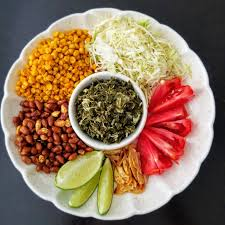
A Burmese tea-leaf salad, adapted for the ingredients you can find in Little India.

Read the recipe →