What's in the bowl
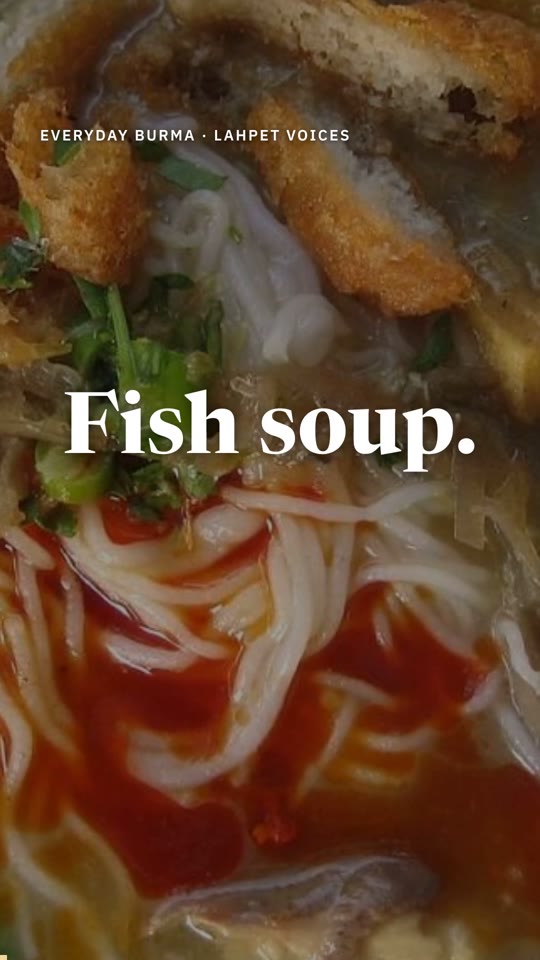
The broth starts with fish, usually catfish, simmered with lemongrass, ginger, garlic and onion. Toasted rice flour thickens it. Slices of banana stem go in too, the soft core of the plant, and give it a crunch that's hard to copy anywhere you can't buy the stem.
It's poured over thin rice noodles and finished however the eater likes: a boiled egg, crisp fritters made from split peas, coriander, a squeeze of lime, chilli flakes, a splash of fish sauce.
When people eat it
Mostly for breakfast, though plenty of places now sell it all day. Most people buy it from a stall or a shop rather than cook it at home. It's also a dish people serve at Thingyan, the new year water festival.


Where it comes from
Nobody is certain. The earliest written mentions are in poems from the Konbaung dynasty, which ruled from 1752 to 1885. Some people tie it to the coast because of the fish; others think it was made from what was cheap and close at hand, river catfish and rice noodles.


Different towns, different bowls
Every region has its own version. Mandalay's tends to have more banana stem. In Rakhine, on the west coast, it's usually hotter, with more chilli.


In Singapore
Peninsula Plaza is the easiest place to find it. Several of the Burmese restaurants and cafés there have it on the menu, including Inle Myanmar and Ye Yint. For the people who cook it, read The taste of home, from a basement kitchen.