
How could we show affection to our children back in those days? How could we be tender and understanding? How could we afford to play with them or fuss over them?1 My husband and I certainly did not have the luxury at that time. No one did.
I always think highly of my father. It was not just his external qualities — his capability, his charisma, his intellect and so on. What I treasured most was his warmth and dedication as a father. He lived with a high set of standards and morals. He stayed away from vices, valued education highly, and never raised his voice at us. He was consistently kind and gentle. He knew that we would come to see the world through his lens of good and bad. Growing up, he was my world. Despite all the burdens of life in Rangoon, my home was a haven with parents who understood and cared for me.
I married Da Mu2 in 1975. We were high school sweethearts for six years, and I respected him as a dependable life partner. By then, Ah Ma had long left us, and Ah Pa was protective of me as the only parent — but Da Mu won him over. He was famously tested over rounds and rounds of chess with Ah Pa, never allowed to leave until a game was lost. After marriage, we followed tradition, and I moved into my in-laws' home.
Da Mu was the second of seven siblings and possibly his mother's favourite. Like many in those times, everyone lived together in a cramped two-storey shophouse unit. My mother-in-law was the matriarchal head of the house. Though she received little to no formal education, she was a competent and shrewd woman who managed the household finances and ruled with an iron fist. She organised all the domestic affairs — the cooking, the cleaning, and was particular about the order in which meals were served. She was frugal and stretched her husband's modest earnings. In her house, the men ate first according to traditional patriarchal Chinese customs. There were unspoken expectations for the men to provide and represent externally, whereas the role of the women was to care for domestic affairs and manage everything within the household.
I never doubted my mother-in-law's love for her children and their partners, but her control over us sharply contrasted with how my parents raised me. Under her wings, I learned to be careful with my actions, ensuring not to put Da Mu in a difficult position. It was not easy, but I accepted it. I slowly learned to accept new forms of love between parent and child.
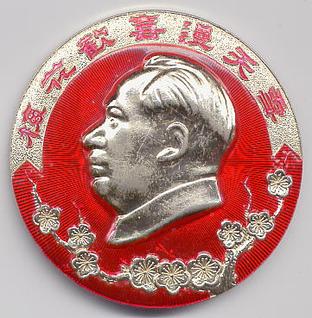
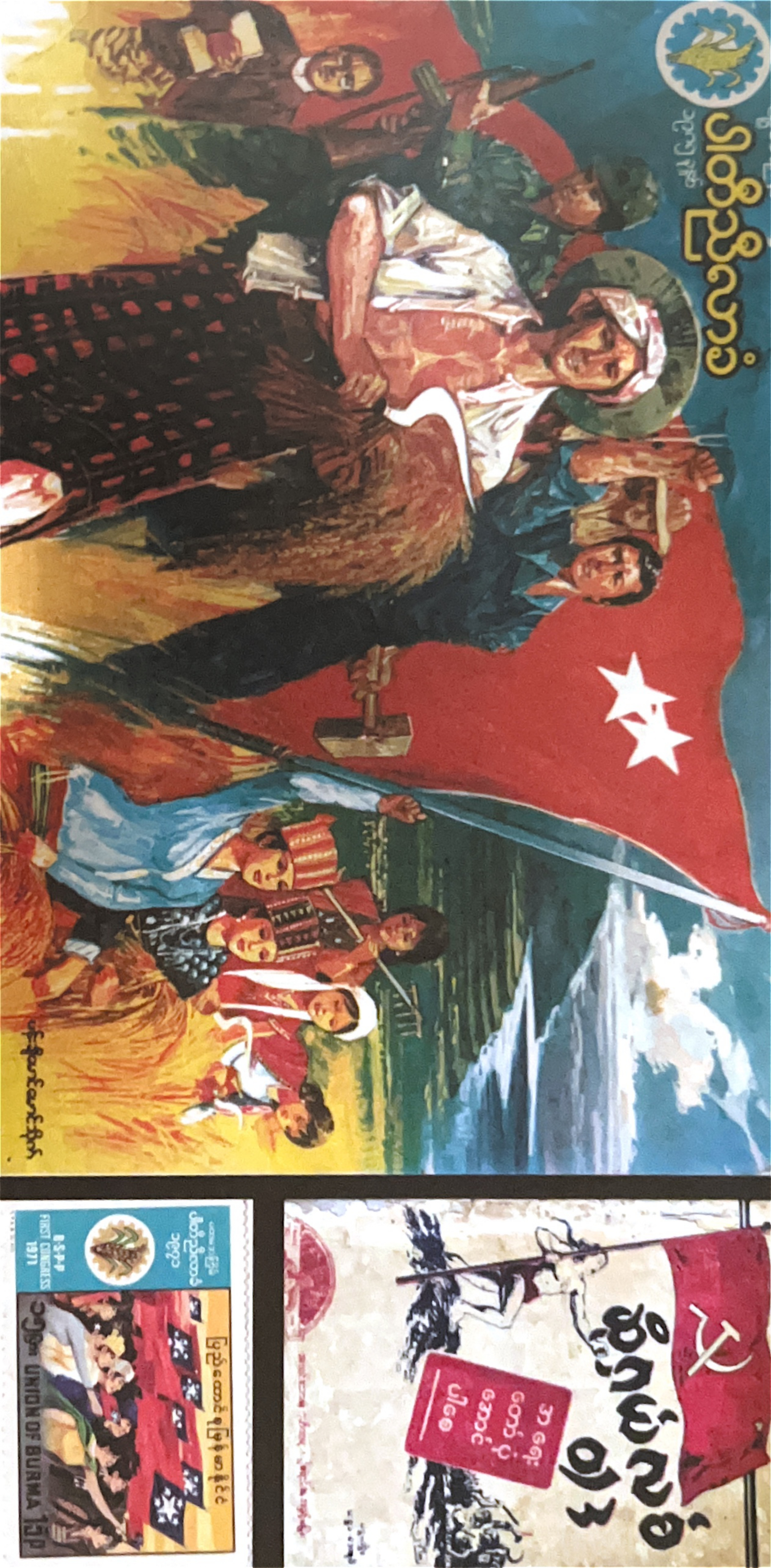
At the point of my marriage, Burma had already been under Ne Win's military dictatorship for some thirteen years. The "Burmese Road to Socialism" promised liberty and equality to peasants across the country at the start of its campaign, but instead destroyed lives indiscriminately. Private enterprises were nationalised, and personal property was seized. The Chinese schools we attended were converted to Burmese schools. The rich lost their fortune, and the poor became poorer. The biscuits we ate as children became rare commodities. Burma's economy shut its gates to the outside world, and we became isolated.
Everything was rationed. We had quotas on basic supplies like rice, oil, and canned food. In theory, it was impossible to get access to anything else. However, where there was demand, there was supply. In response to prohibition, the black market blossomed, trading illegally through Myanmar's vast porous borders with China, India, and Thailand. Da Mu and I seized the opportunity to build a small business.
We opened up a stall in the Saint John open-air market — Stall No. 30. It was a small four-by-four-foot platform sheltered by a zinc roof, much like modern-day stalls in Yangon's wholesale market Mingalar Zay. When it rained, the sound was deafening.
We sold cosmetics and garment accessories such as buttons, lace ribbons, and zips. Even though there was often the risk of lost cargo or bad debt, we gained a solid base of customers due to our consistency, reliability, and good service. The business was profitable and grew steadily.
After five years or so, Da Mu found an opportunity in car brokerage, leaving me in charge of the shop. The business grew further, and we moved to a larger space in Theingyi Zay.
Work completely consumed Da Mu and me. After a long day at the market, I would visit Ah Pa at Lek Lek's house and catch up about the day's events. When I got home, I kept my head down and avoided my mother-in-law's piercing scrutiny. The years went by in a blur.
I conceived my first child, Mie Mie3, in 1975, and then three more sons — Ah Ti, Min Min, and Hong Long. With every pregnancy, I would have barely recovered from confinement before I was back at the market again.
Those days made it difficult to keep up hope. Scarcity and poverty persisted in Rangoon as Ne Win's reign of terror gripped the country. At times, money could not get you simple goods like a jar of Horlicks or a bar of Cadbury chocolate. When I had my children, every safe delivery was like a miracle. I just wanted them to survive and be healthy. I knew they would be cared for in the big family home by other family members in one way or another. I felt strongly that to love my children was to provide for them. To do so, it was important to work and earn money. I was single-minded and focused on ensuring we had enough for the children to live comfortably.
How could any parent of my time dote on children unconditionally as my parents did? How could any parent spend idle hours playing with their children or showering them with care while they also had to spend hours queueing up for Lactogen to feed them? How could any parent say sweet words and coax their children to bed at the end of a long day?1 I certainly could not.
About this story
This is the second chapter of My family's personal experiences, a series of stories from the families behind Lahpet Voices, written to be read like a small book — one chapter at a time.
This chapter is a record of family history gathered through an interview that the author conducted with their grandmother — the narrator of this first-person account. It was then structured, lightly edited for clarity, and framed with chapter headings and notes in collaboration with the narrator. It is told in her own voice, in the first person, and every line was reviewed and approved for publication under Lahpet Voices' safety and consent policy.
Names of family members and identifying details have been kept as agreed with the contributor.
Notes
- Opening and closing refrain — the first and last passages of the interview are the narrator's own words, framing the chapter with the question she returns to throughout.
- Da Mu — also known as Dai Bor; the narrator's husband and the author's current grandfather on their mother's side.
- Mie Mie — the narrator's eldest child and the author's mother.
A word from the author
My grandmother did not describe her childhood and young married life as a tragedy. She described it as a set of constraints — of queues, ration books, scarcity, and a house where the men ate first — and the practical decisions she made within them. To love was to provide. To rest was a luxury that none of them had. She says it plainly, without self-pity, the way a whole generation learned to say it.
That is why this chapter belongs on Lahpet Voices. So much of what this site collects — food, festivals, language, the small customs carried across borders — comes from the labour and endurance of people like my grandmother. The migrants who work in Singapore today did not leave a country where life was easy. They left one where survival had long required a Stall No. 30 of their own. The black-market goods, the ration queues, the iron-fisted households, the decisions made between survival and tenderness — these are not curiosities of a distant past. They are the foundations that many Burmese families, at home and abroad, are still building on.
To read my grandmother's story alongside the interviews with migrant workers is to read one continuous account of the same family: a people who kept going, kept providing, and kept the warmth alive however they could — even when all they had to give was work. This series is how I keep the record, in her own voice, so that what she endured is remembered as more than a statistic. It is how I say: she was here, she provided, and we are still here because of it.