You were born here, in Singapore. But the first story of you begins in Myanmar. What did you grow up knowing about your family?
I grew up knowing the shape of it without knowing the weight of it. I knew my parents came from Myanmar. I knew there had been a war, or a coup, or something they did not like to talk about in front of me. I knew my grandparents were in a country I had only seen on a screen. What I did not know, for a long time, was how much it cost them to be here. Children are told the story of their family in little pieces — the funny story, the proud story, the one that must never be told. It took me years to start putting the real pieces together, and it took the family memoir work to see the weight my father carried on the way here.
You grew up Singaporean in most ways. What did that feel like as a child?
It felt normal, because it was the only normal I had. I went to school with friends whose families were from everywhere and nowhere. I spoke English without thinking. I knew the MRT lines the way other kids know their street. The unusual part was not being in Singapore. The unusual part was going home, where the language switched and the food was different and the stories were about a country I had never stood in. For a long time I was not sure which home was the real one, and I think the truest answer is that both were, and that was the whole difficulty.
What was it like to belong to a country you had never really lived in?
Complicated. When people found out I was Burmese, they expected me to know things I did not. They expected the food, the language, the customs to be automatic, and they were not, not the way people assumed. And at the same time I was not fully "local" either, because I had this whole other country in my house. For years I felt like I was doing belonging wrong on both sides. I was too Burmese for some people and not Burmese enough for others, and I was too Singaporean to newcomers to be counted as an outsider. It is a strange place to live, between the two. But I have come to think that between is not a failure of belonging. It is just a different way of belonging.
Did you learn your parents' actual history late, through the memoir?
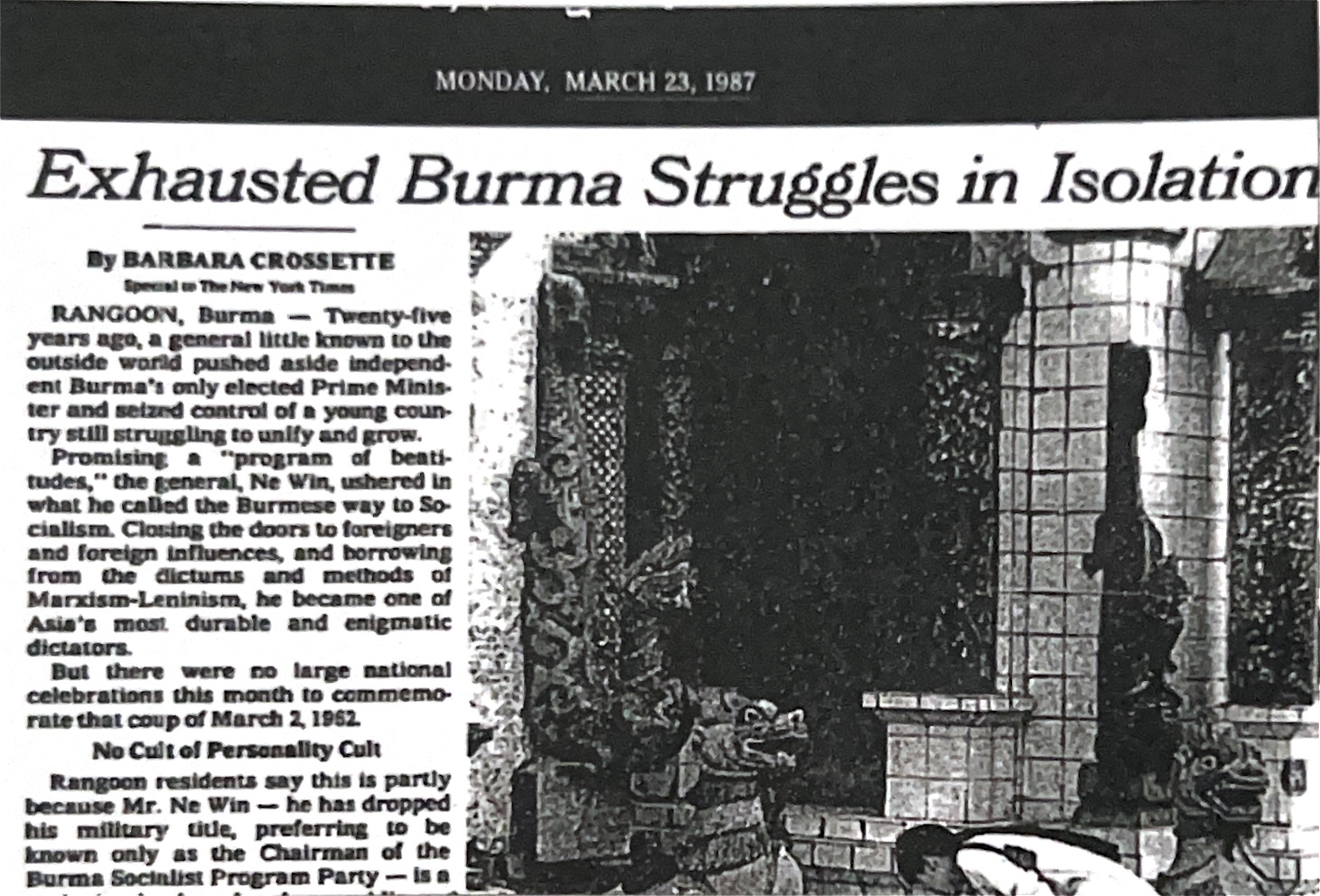
Very late, and partly through the memoir. My father told me about 1967, about the riots, about losing his parents, about failing Grade Ten five times, about surviving the uprising and bringing our family here. He told me more in a few recorded sessions than he had in my whole life before that. I think he was protecting me, and I think recording the family was also his way of making sure I would finally understand. It worked. For the first time I understood that the man who took me to school and fixed my bike had lived through things I could barely imagine. It changed how I see him, and it changed how I see myself as his daughter.
What do you want to carry forward from the family's story?
The resilience, I think, and the refusal to let it make them bitter. My father lost everything and he did not become hard. He became careful, and kind, and very, very determined that his children would have a steadier life. I want to carry that. I want my children, if I have them, to know they come from people who were knocked down and got back up, not by being lucky but by being stubborn and loving and willing to start over. The memoir makes sure they will know. That is what this work is for. It is me and my father, making sure nobody forgets where we came from, however far we are from it now.
You said belonging is “between.” What would you tell another child growing up the way you did?
That it is not a problem to be solved, and it is not a betrayal either way. You do not have to choose one country and throw the other away. You can love the place you live in and still carry the place you came from. Belonging is not about matching everyone else in the room. It is about knowing where you come from well enough to stand anywhere and still know who you are. I used to think belonging was about fitting in. Now I think it is about being complete. And you are only complete when you can hold both countries without dropping either. That is the whole trick, and it takes a lifetime to learn, and it is worth it.
Names and identifying details have been changed to protect the contributor, in line with our safety and consent policy.