

We migrated to Singapore in the early 90s. I was eight, my brother Kai Kai was four, and my sister Zhen Zhen was two.1
I was the only one of us old enough to retain some firsthand memories of our home in Yangon. I remember scenes of my cousins Mie Mie and Min Min coming to visit Grandpa in our home on Shwe Dagon Payar Road with Aunt Eng Eng. I remember sitting on Grandpa's lap as he read English and Chinese stories to me. I remember Mum's big extended family and their frequent hangouts as well. Even as a child, I understood the comfort we had to leave behind to pursue a better future.
It was not that Singapore was uncomfortable, but it was undoubtedly foreign. We were fortunate that Aunt Mei Mei, who moved to Singapore ahead of us, could guide us in finding our bearings. Still, I could sense the immense pressure it placed on my parents. They took care of the transition in different ways. My dad focused on providing for the family by building up a business from scratch with his sisters. Meanwhile, my mum took charge of managing the children's well-being.
I always believed my mum and I are profoundly connected. Her Chinese zodiac is a dog, and so is mine. It helps me relate easily to her hardship and experiences. In my eyes, she was a fighter who swallowed her pride and refused to give up so that she could fend for her family. In our first rental HDB unit, the landlord insisted on inspecting our place every week and frequently brought her grandchild around during the day. The lady would babysit her grandchild while scrutinising my mum's housekeeping skills. Not only was it humiliating for my mum, but it was also downright illegal. Knowing that my parents were new migrants with little knowledge of their legal rights, the landlord abused her authority throughout the tenancy. This period caused my mum much anxiety and stress, but she persevered and endured the discrimination. She often told my dad that she would walk back to Yangon if she could, but she never caved in. She put three meals on the table, took us on bus rides even if she was not confident about the directions, and supervised our schoolwork to the best of her ability. Her commitment to planting new roots in Singapore as a family did not waver.
Comparatively, the children had a much easier time adapting to Singapore. The three of us joined our cousin Ronald at Fuhua Primary School. On the first day of school, I recall that the teacher instructed me to sit cross-legged, but I had trouble understanding her due to my poor command of English. It was the first sign of how big the gap was between the Singaporean and Myanmar education. Internalising all my parents' sacrifices drove me to work doubly hard to catch up to my peers. In due time, I went from last in class to the top percentile.
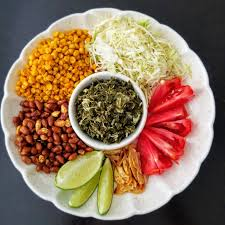
My siblings and I became well-assimilated, and it was hard to differentiate us from the average Singaporean. The only differences were that we could speak an additional language, regularly had Mohinga2 for breakfast, and spent many of our weekends in Peninsula Plaza. Peninsula Plaza, unlike today's well-established Little Myanmar, used to be an ordinary commercial building in the heart of Singapore. It had a good mix of tenants, and you could find almost anything there: computer parts, pirated CDs, camera equipment, shoes, books, and many more. My dad and Aunt Mei Mei opened Yedenar Pte Ltd. on the third floor as a money remittance and general store. They were one of only two stores dedicated to serving the Burmese diaspora in Singapore. To be able to open seven days a week, the pair worked out an arrangement to each work one day of the weekend. On the Saturdays that Dad was on duty, he would bring the entire family along.
Peninsula Plaza became our playground. As work was hectic on the weekends for the adults, we were left to idle and entertain ourselves. The three of us regularly visited the MPH bookstore in the basement, freely browsing all the books and never checking out. At times, our cousin Ronald would join us to explore and seek out adventures within the mall. We would peek into the dark and mysterious tattoo parlour — what happens behind those doors was way too cool for our imagination. We would also shamelessly ask for pocket money to indulge in meals at the Burger King on the ground floor and Slurpees from 7-Eleven. Sometimes, we would play a game of catch with the other kids in the building, triggering angry security guards to chase after us as we ran up and down the escalators with glee.
The funniest and most memorable incidents usually involved my sister. Once, Zhen Zhen scribbled all over a book and was caught red-handed. The MPH storekeeper dragged Zhen Zhen to Yedenar and demanded my parents purchase the damaged book. Another time, she stuck her entire hand into the escalator gap, causing it to perform an emergency stop. It caused much frustration as the building managers had to call for technicians to rescue her urgently. The adults were astonished to learn that she was unscathed. Zhen Zhen was also notorious for her ability to sleep at any time and anywhere. My parents often laid a few layers of batik under an office desk for her to nap. She could do so without a care in the world.
On the precious days off, my parents brought us out for recreational activities like watching movies, catching Disney on Ice, or just visiting malls. Iconic locations like the circular outdoor seating areas in Shaw Plaza and the endless shops in Marina Square were our usual haunts. My parents were city people and preferred indoor activities. To complement them, Aunt Mei Mei and her husband would often take all the children out for outdoor activities like visiting the zoo, cycling, and going to the beach. The adults in our close-knit family in Singapore not only dedicated their time but also showered us with the latest gadgets and toys. They ensured we had everything they could not.
Over the years, our family grew in number and strength. Aunt Mei Mei hosted my cousins from Yangon whenever they came to Singapore to further their studies. As a family, we created new traditions in Singapore and made it our home. Each Lunar New Year, Aunt Eng Eng and Uncle Da Mu would fly in to partake in the festivities. One of the things the elders would do was to stay up late on the eve of New Year's to usher in good luck and longevity. The kids joined in for endless games of mahjong and cards. These joyous gatherings were filled with delicious food and bottomless laughter.
There was a particularly memorable year when I decided to stay home as my family went to Aunt Mei Mei's. When they came home in the early morning, I was so sound asleep that I could not answer the doorbell and let my family in. As a result, they had to spend a night back at Aunt Mei Mei's, and I never got to stay back again.
My formative years in Singapore were blissful. It was a group effort from my parents, uncles, and aunties. Thanks to them, I never felt out of place or lacking.
About this story
This is the fourth chapter of My family's personal experiences, a series of stories from the families behind Lahpet Voices, written to be read like a small book — one chapter at a time.
Where the earlier chapters followed the generation that left — the grandmother supplying from a market stall, the boy who carried that instinct into Peninsula Plaza — this chapter hands the telling to the generation that arrived. It is the story of the daughter of the family, the eldest child in the household that crossed the border in the early 1990s. It records what it was like to grow up between two countries: the mother who endured the landlord's inspections rather than give up, the siblings at Fuhua Primary, and the Saturdays spent making a foreign shopping mall their own.
This chapter is a record of family history gathered through an interview that the author conducted with the narrator — a family member of the generation this chapter belongs to. It was structured, lightly edited for clarity, and framed with chapter headings and notes in collaboration with the narrator. It is told in her own voice, in the first person, and every line was reviewed and approved for publication under Lahpet Voices' safety and consent policy.
Names of family members and identifying details have been kept as agreed with the contributor.
Notes
- Opening refrain — the opening lines of the interview are the narrator's own words, framing the chapter around the moment her childhood crossed a border.
- Mohinga — the national dish of Myanmar, a fish soup made with rice noodles, typically served as a hearty breakfast.
A word from the author
This chapter is the point where the series turns to face home. Chapter Three closed with the father's plain self-assessment — "I am one lucky man" — and this is the possibility that luck made real. His daughter remembers the early-90s rental flat where a landlord inspected the house every week, and the mother who answered with meals, bus rides, and the quiet refusal to walk back to Yangon. In Chapter Three the narrator chose the children over the country of his birth; here his daughter becomes the proof of the choice.
I find myself moved by the details a child keeps: the MPH bookstore she and her siblings browsed and never checked out, the batik layers under an office desk where Zhen Zhen napped, the escalator emergency stop, the Saturdays in a mall that was never "Little Myanmar" yet was unmistakably theirs before anyone had named it that. These are the small things that become a life. To the reader who grew up here, they are almost embarrassingly ordinary. To a family that built them out of a four-by-four stall and a borrowed footing in a foreign city, they are the texture of having made it. This chapter is how the second generation honours the first — by remembering the new roots they were given, and planting a few of their own.