
The restaurant
Peninsula Plaza, in the heart of Singapore's City Hall district, is a building that belongs to more than one country. On its ground floor and basement you will find money remittance counters, phone stalls, groceries, and a food court that has quietly become the unofficial living room of the Burmese community in Singapore. Among those basement stalls sits Inle Myanmar Restaurant, at #B1-07A, 111 North Bridge Road.

It is a no-frills place: bright lights, long communal tables, a menu that runs from pickled tea-leaf salad to Yangon fried noodles and the national breakfast, mohinga. The crowd is mostly Burmese workers and students, with a steady trickle of curious Singaporeans. The staff move fast between the counter and the tables, and on a busy lunch the queue stretches past the supermarket.
We sat down with one of the kitchen hands who has been with the restaurant for several years. He asked us not to use his real name, and to keep the details that might identify him vague — a courtesy we extend to everyone we speak with. What follows is our conversation, edited for length and clarity, told in his own voice.
How did you end up working here, in a Burmese kitchen in Singapore?
I came to Singapore for the usual reason — work, and a wage that could actually support my family. My first job had nothing to do with food. I worked long hours and I was lonely, the way everyone is lonely at the start. Then I found out about this place. A friend said they were looking for help, and that the people here spoke my language and cooked my food. The first day I walked into the basement, I heard so many different Myanmar accents at once that I almost cried. I started here part-time, washing and chopping, and I stayed because for the first time in Singapore I did not have to explain myself. Everyone here already knew what home sounded like.
What was it like learning the kitchen?
In Burma I cooked at home, for my family, but a restaurant kitchen is a different world. It is faster, louder, and there is no room to be gentle with yourself. The first months I made mistakes — burnt pots, the wrong amount of fish sauce, a soup that was too salty for a whole table. The senior cooks were patient in a way I did not expect. They would taste, nod, and show me again. Nobody shouted. In my old job, mistakes got you shouted at. Here, mistakes just meant somebody taught you again. That is how I learned the dishes properly: the mohinga, the lahpet thoke, the Shan noodles, the fried tofu that has to crack just right. Cooking is memory. You are not following a written recipe; you are following what your mother and grandmother did, and trying to make it true for someone who is missing it.
Walk me through a normal day.
Before dawn we are prepping. The rice is washed, the broths are set to simmer, the vegetables are chopped fine. By the time the mall opens, the big pots are already talking. Through the day it is a rhythm — the register, the sizzle, the trays of food going out, the tables filling up. Lunch is the rush; that is when the workers from around the city come in for a hot meal and a few minutes of being understood. We do not stop until the pots are nearly empty. By evening, my shoulders ache and my arms smell of garlic and fish sauce no matter how many times I wash. And somehow it is the best tired I have ever been. At my old job, I was invisible. Here, when somebody takes a bite and closes their eyes, I know I did something real.
Which dishes matter most to people?
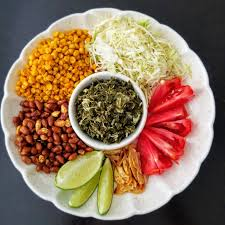
Mohinga is the one. It is the breakfast of our country, and if you grew up there, the smell of it in the morning is the smell of home. We make flats of it every day and we still run out. A lot of the workers tell us it is the only thing that tastes like their grandmother's. Then the lahpet thoke — the tea-leaf salad — which everyone has an opinion about, and argues about, the way families argue about who makes it right. And the Shan noodles, which remind people of the north. But really, it is not about the one dish. It is that the food here is not exotic or strange to us. It is ordinary, the way home is ordinary. For somebody who has been working six days a week in a foreign country, an ordinary plate of Burmese food is the most extraordinary gift you can give them.
Who comes through the doors?
Everyone. The construction worker who comes alone and eats quickly. The group of friends who share three dishes and talk loudly about news from home. The new student who looks lost until someone greets them in Burmese and suddenly they are not lost anymore. The Singaporean who comes in curious and leaves a regular. On weekends there are families, and sometimes three generations of the same family discovering each other over a meal. Peninsula Plaza is like a village for us. You come for the food, but you stay because you found people. I have seen strangers become friends at the tables next to the counter. That is what the building does. We just cook the food that gives them a reason to sit down together.
You cook food from home for other people who are far from home. What does home mean to you now?
Home is a hard word for me now. It used to mean one place, the town I grew up in. Now it is split. Part of me is still there, with my family, in the food I remember. Part of me is here, in this kitchen, with these people. When I cook, I bring the two parts together for a moment. I do not know if I will ever live back in Burma. But I know this: I can make a bowl of mohinga taste exactly like the one from home, and when someone closes their eyes eating it, we are both home for a second. That is the closest thing I have to a single answer. Home is not one place anymore. Home is the food I can make that reminds someone else of theirs.
A note from us
We have written before about the long table at Peninsula Plaza, and about how a shopping mall became a second living room for a whole community. This is the story from the other side of the counter — of the people who make sure the table is never empty. We are grateful to our contributor, and to every kitchen hand and counter staff who keeps that basement warm. A chef's work is easy to overlook, but it holds a community together one plate at a time.
He left us with a small recipe before we went — a weekday version of mohinga for people far from home. He insisted it was the "honest" one, the kind you can make with what you can find here.
Mohinga, the honest version (from the Peninsula Plaza kitchens)
He calls it "honest" because it is not the full ceremony — no banana stem, no woven basket of garnishes. Just a warm, savoury rice-noodle soup that tastes like breakfast at home.
- 2 tablespoons rice flour, mixed with a little cold water
- 4 cups fish stock (or water + 1 fish stock cube)
- 1 onion, sliced thin
- 2 cloves garlic, minced
- 1 teaspoon roasted chickpea flour (besan)
- 1 teaspoon turmeric
- 1 tablespoon fish sauce, or to taste
- 200 g rice vermicelli, cooked
- For the top: sliced boiled egg, crispy fried shallots, a few coriander leaves, lemon wedges, dried chilli flakes
Soften the onion and garlic in a little oil. Add the fish stock, turmeric, and rice-flour mixture, and simmer until it thickens slightly. Whisk in the roasted chickpea flour a little at a time so it does not clump. Season with fish sauce. Ladle over the noodles and pile on the toppings. "The egg and the fried shallots are not optional," he said. "They are what make it feel like a proper morning."
Names and identifying details have been changed to protect the contributor, in line with our safety and consent policy. Restaurant details are shared as public information; this piece is not an endorsement or an official account of the restaurant.