

What a longyi is
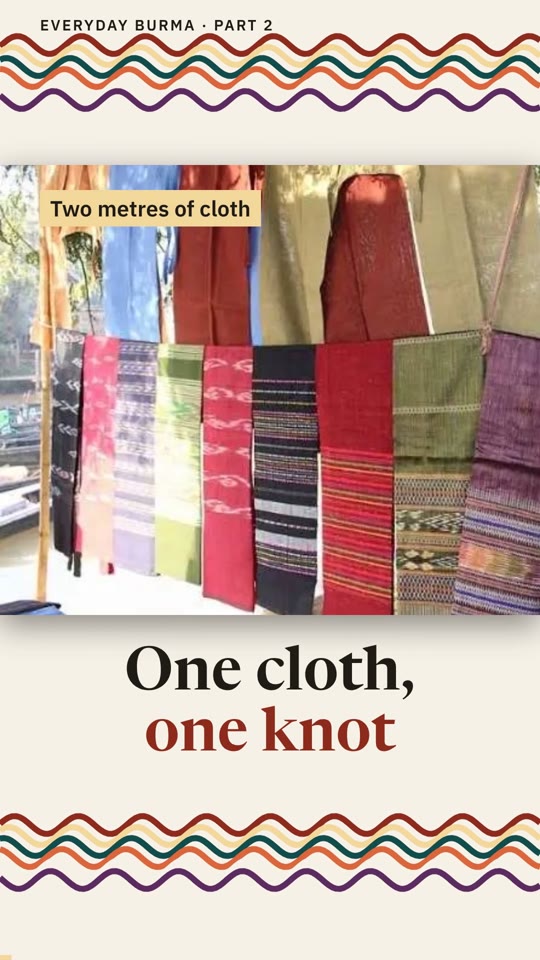
A longyi (လုံချည်) is a piece of cloth about two metres long, sewn into a tube and worn from the waist to the ankles. Men and women wear it all over Myanmar, in offices, markets, temples and at home. There's no button, zip or belt. It stays up because of how you tie it.
Paso and htamein
A man's longyi is a paso (ပုဆိုး). He steps into the tube, pulls the two sides out wide, folds them across each other and twists the ends into a knot at the front, just below the navel. Men's longyis are usually checked or plain, in blues, greens, browns and greys.


A woman's longyi is a htamein (ထဘီ). It's folded over across the front and tucked in at one hip, usually worn with a short fitted blouse. Htameins are more often printed, flowered or woven with patterns.
Retying it is something people do without thinking, several times a day: you loosen the knot, pull the cloth tight and tie it again.
Newer than it looks
The longyi feels ancient, but the sewn tube as people wear it now caught on during British rule, in the late 1800s and early 1900s. It's said to have come over with migrants from southern India, where a similar cloth is called a lungi. Before that, Burmese men and women wrapped longer pieces of unsewn cloth in more elaborate ways, especially at court.


Acheik, the court silk
The most valuable longyis are woven in acheik (အချိတ်), silk with bands of tight, wave-like zigzags. The pattern comes from Amarapura, near Mandalay. Weaving it can take anywhere from 50 to 200 shuttles, each wound with a different colour of thread, which is why it's also called luntaya, "a hundred shuttles". Under the Konbaung kings, only the royal court, officials and their households were allowed to wear it.


Today anyone can wear acheik, and it's the cloth people choose for weddings, graduations and big religious days.
A pattern says where you're from
Kachin, Chin, Karen, Shan, Mon and Rakhine weavers all have patterns and colours of their own. Someone who knows cloth can often tell where a longyi was made just from the weave.


Very practical
The longyi is also a tool. You hitch it up to your knees to play chinlone, the cane-ball game. You fold the slack into a pouch to carry shopping. You tie it high under your arms to bathe in a river, and at night it doubles as a sheet.


Far from home
Plenty of people who've left Myanmar still keep one for temple days and weddings. In Singapore, the shops at Peninsula Plaza sell them.

