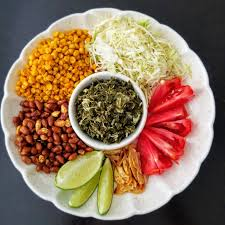
The base
What makes lahpet thoke Burmese is not the tea, but the balance: crunchy, soft, sour, salty, bitter, and a little bit of heat, all in one bite. The toppings are negotiable; the balance is not.
You will need fermented tea leaves (available at Myanmar shops in Peninsula Plaza or ordered online), toasted sesame seeds, peanuts, garlic chips, dried shrimp, shredded cabbage, tomato, and lime. The fish sauce and the lime are doing more work than you think.
The classic (when you can find everything)
- 2 tablespoons fermented tea leaves, lightly rinsed
- 1 cup shredded cabbage
- 1 tomato, sliced into thin wedges
- 1 tablespoon toasted sesame seeds
- 2 tablespoons crushed roasted peanuts
- 1 tablespoon garlic chips
- 1 tablespoon dried shrimp, toasted
- 1 tablespoon fish sauce
- 1 lime, juiced
- 2 birds-eye chillies, sliced
Toss gently. Taste. Adjust salt with fish sauce, sour with lime, heat with chilli. Serve at room temperature, with extra peanuts on top.
The pantry version (Little India run)
Substitute fermented tea leaves with pickled mustard greens, rinsed and chopped. Use Indian-style roasted peanuts, toasted sesame oil in place of sesame seeds, and a small spoon of tamarind paste for sourness. Still recognisably lahpet thoke; quieter, but honest.
The show-off version
Add blanched split peas, fresh coriander, a soft-boiled egg cut in half, and a few shards of crispy fried garlic on top. This is the version you make for guests who have never tried Burmese food. It works.
Notes from the kitchen
If you cannot find fermented tea leaves, do not be embarrassed to use the pantry version. The point of lahpet thoke is to share a table, not to pass a test. In Myanmar, every family makes it slightly differently, and they all insist theirs is the right one.
This recipe was adapted with help from contributors in Singapore. If you have your own version, send it to us — we would love to publish it.