

Tea you eat
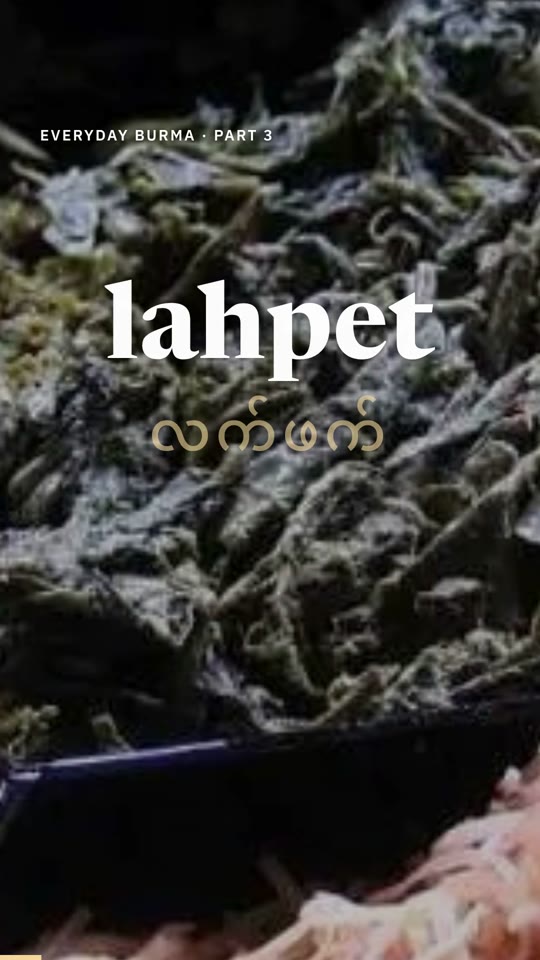
Lahpet (လက်ဖက်) is the Burmese word for tea. Most of Myanmar's tea is dried and drunk, either as plain green tea, which is free on every tea shop table, or as black tea for sweet milk tea. But about a sixth of the harvest is pickled instead. Pickled tea is lahpet so, "wet tea", and it's the thing most people mean when they say lahpet.
Steamed, packed, pressed
Only the youngest leaves and buds are pickled. They are steamed for a few minutes, then packed tightly into bamboo vats or clay pots, often set into pits in the ground, and pressed under heavy weights to squeeze the water out. Then they are left to ferment, without air, for three or four months. Bacteria that make lactic acid do the work, the same kind that sour pickles and yoghurt.
The leaves are ready when they have turned from green to a golden green and gone soft. They are washed, kneaded and drained, then dressed with garlic, chilli, salt, lime juice and oil.


From the hills of Shan State
Most of the tea comes from the hills of northern Shan State, especially around Namhsan, in country that has long been home to the Palaung (Ta'ang) people. There are smaller tea areas near Mogok and Kengtung. The main picking season is April and May. In recent years fighting in northern Shan State has made the harvest, and getting it to market, much harder.
Lahpet after a dispute
Before British rule, kingdoms at war exchanged lahpet as a peace offering once a fight was settled. The same idea carried into the courts. In both royal and colonial times, lahpet was served after a judge gave a verdict in a civil case, and eating it meant both sides accepted the ruling.
It still marks big moments. Families invite people to a shinbyu, the ceremony where a boy becomes a novice monk, by going door to door with lahpet, and accepting the invitation means eating some. No wedding or religious feast feels complete without it.


Lahpet ohk, the welcome tray
Served the old way, the Mandalay way, lahpet comes in a lahpet ohk (လက်ဖက်အုပ်): a lacquer dish with a lid and little compartments. The tea, dressed in sesame oil, sits in the middle. Around it go crunchy things: fried garlic, fried beans and peas, peanuts, toasted sesame, dried shrimp, sometimes preserved ginger or fried coconut. Each person mixes their own mouthful. It's put out for guests, often with green tea, and it's how plenty of Burmese homes still say welcome.
Lahpet thoke, the salad
The Yangon way is to mix everything into a salad, lahpet thoke (လက်ဖက်သုပ်), with shredded cabbage, tomato, green chilli and garlic, dressed with fish sauce, oil and lime. It's the version most people abroad know. Our recipe page has three ways to make it in a Singapore kitchen.


Of all the leaves
There's an old saying: of all the fruit, mango is the best; of all the meat, pork; and of all the leaves, lahpet. It's also where our name comes from.
If your family makes it a different way, send us the recipe.